A practical framework for designing a UK pharmaceutical distribution business in which authorisation, quality governance and commercial operations develop in the right order.
Compliance is an operating sequence
A pharmaceutical distribution company does not become compliant because it has a licence application, a warehouse contract or a well-written quality manual. Compliance emerges when the legal authorisation, operating model, people, records and daily decisions agree with one another. In the United Kingdom, that requires a deliberate sequence: define the intended activities, determine the authorisations and responsible roles those activities require, design the quality system, qualify the outsourced parties, test the controls and only then commence the regulated work.
This sequence matters commercially as much as regulatorily. A company that sells ahead of its permissions, promises products before source evidence is complete or treats outsourced logistics as outsourced responsibility creates risk that no polished website can repair. A compliance-first model makes the opposite choice. It regards regulatory readiness as a condition of revenue, not an administrative task running behind it.
Start with an activity map
The first useful artefact is not a licence form. It is a map of the activities the company intends to perform. Will it purchase and resell authorised medicines? Import from an approved country? Source parallel-import products from the EEA? Assemble or relabel packs? Store stock at a contracted site? Arrange transport without taking physical possession? Different answers can produce different authorisation, site, Responsible Person, quality-agreement and record-keeping requirements.
The activity map should identify every organisation that touches the product or its records. It should show legal title, physical custody, batch release, import checks, storage, transport, complaints, defects, recalls and pharmacovigilance escalation. It should also identify which company makes each decision. A service provider may perform an activity, but the contracting pharmaceutical business retains duties that must be defined and monitored.
- Describe the product and market scope without assuming authorisation.
- Map legal ownership and physical custody separately.
- Assign each regulated decision to a named role.
- Record every outsourced activity and its oversight mechanism.
- Define the evidence required before the activity can begin.
Build the QMS around real decisions
A Quality Management System should explain how the organisation controls the work it genuinely performs. Generic procedures copied from another business often fail because they do not match the current team, systems, products or outsourcing model. A useful QMS begins with policy and governance, then translates those commitments into controlled procedures, forms, registers, training records and review routines.
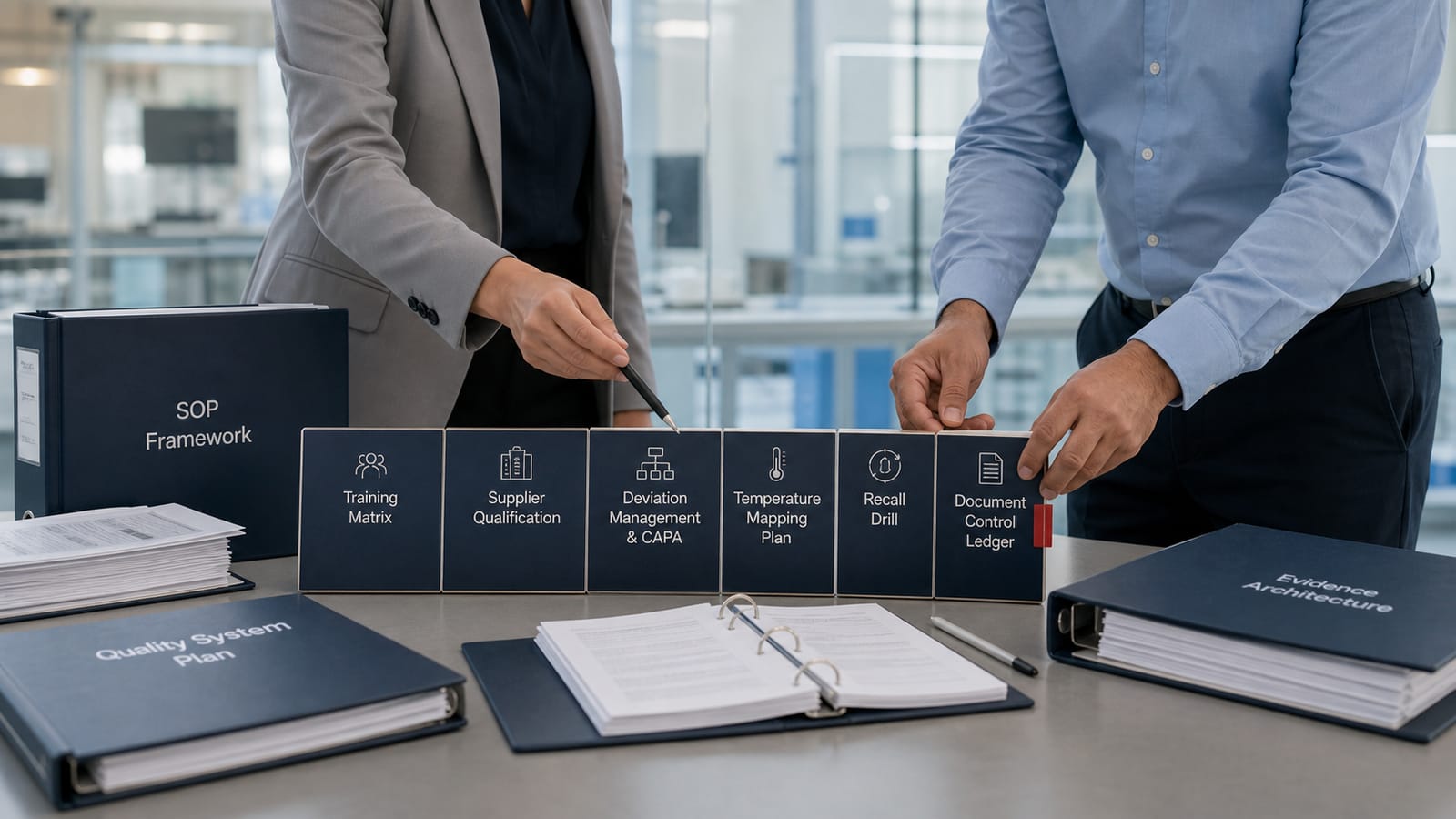
Core processes normally include document control, training and competency, supplier and customer qualification, change control, deviations, corrective and preventive action, complaints, returns, suspected falsified medicines, recalls, self-inspection, management review and data integrity. The exact design must remain proportionate to the authorised activities. The important test is whether a trained person can follow the procedure, produce the required evidence and escalate a problem without improvisation.
Qualify the network, not just the supplier
Modern pharmaceutical distribution depends on networks: manufacturers, marketing-authorisation holders, wholesalers, importers, assemblers, laboratories, logistics providers and technology services. Qualification cannot stop at collecting a licence PDF. The organisation needs to verify the scope and currency of the authorisation, understand the site and product relationship, assess quality history, agree responsibilities and monitor performance over time.
A risk-based qualification file should connect corporate identity, authorisation evidence, audit rationale, technical documents, quality agreements, approved activities and ongoing review. Where a source or service changes, the change-control process should assess whether product, licence, transport, labelling, data or customer commitments are affected. This is where a unified data and document model becomes valuable: the supplier record, agreement, product, approval and audit trail remain linked rather than living in separate inboxes.
Design outsourced logistics as a controlled relationship
Third-party pharmaceutical logistics can be capital-efficient, but it does not remove the need for governance. The quality and service agreements should define storage conditions, temperature monitoring, receipt, quarantine, release status, picking, dispatch, returns, reconciliation, incident handling, business continuity, subcontracting, access to records and audit rights. Commercial service levels and GDP responsibilities should be clear but not confused with each other.
Data integration also needs control. An inventory feed is useful only when its source, update time, units, batch logic and exception handling are understood. The customer portal should never present stale or provisional stock as released inventory. When an integration is unavailable, the interface should show that state plainly rather than substitute estimated values.
Use stage gates for commercial growth
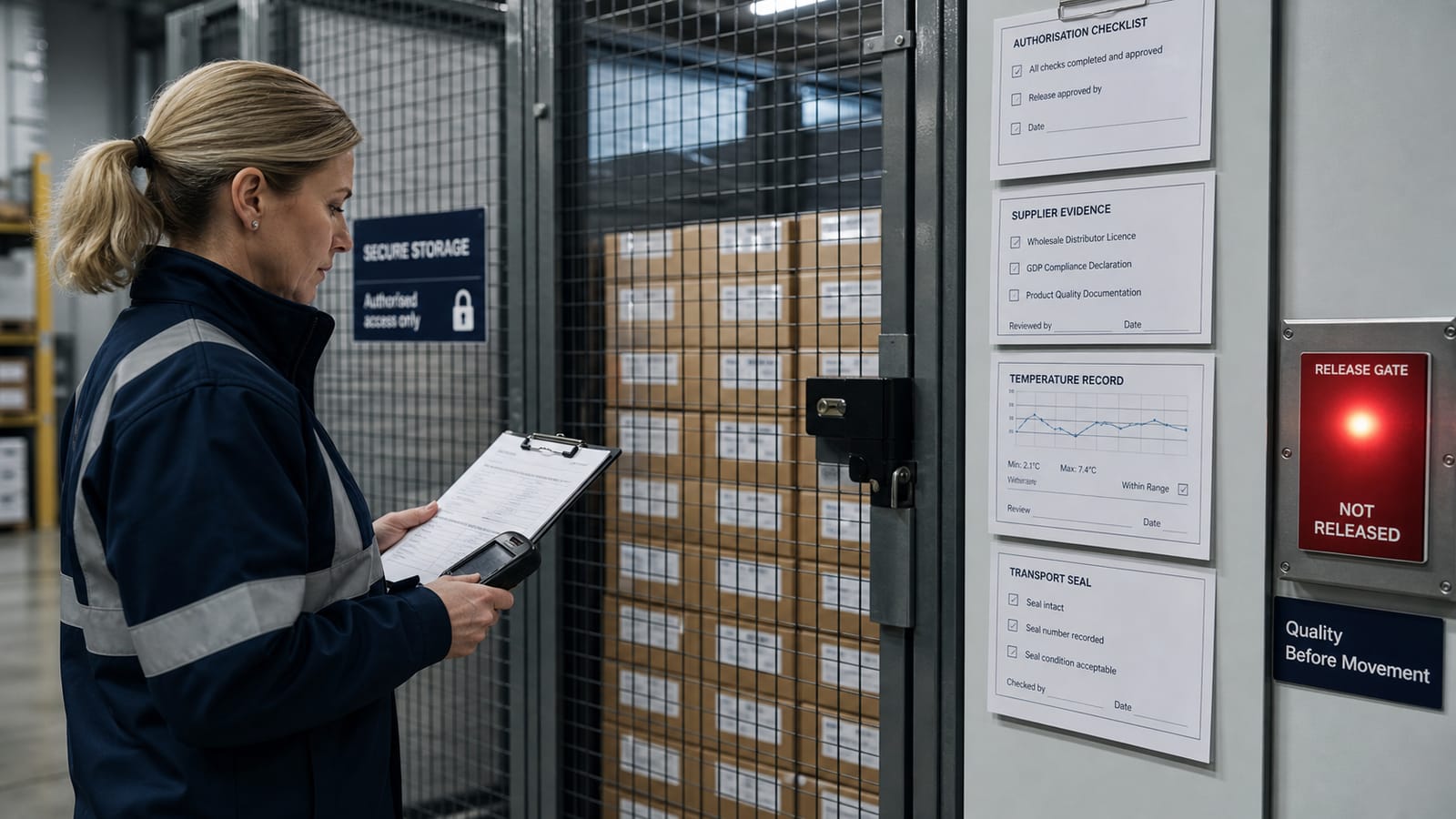
A compliance-first business can still move quickly. It does so by defining stage gates. A product opportunity may pass from initial review to confidentiality, technical assessment, regulatory pathway, supplier qualification, agreement, operational onboarding and launch readiness. Each stage has a small number of objective entry and exit criteria. Commercial colleagues can see progress without treating an early opportunity as available stock.
The same discipline should appear on the public website. Corporate positioning can explain strategic focus and planned capability, while status labels distinguish live services, work in development and longer-term roadmap items. Product pages should make clear that they are for qualified B2B engagement and that availability depends on applicable authorisation, source approval and inventory verification.
The result is not slower growth. It is growth that can withstand scrutiny. For a new UK pharmaceutical company, that is a more durable advantage than a launch announcement, an unverified product list or an ambitious technology claim.
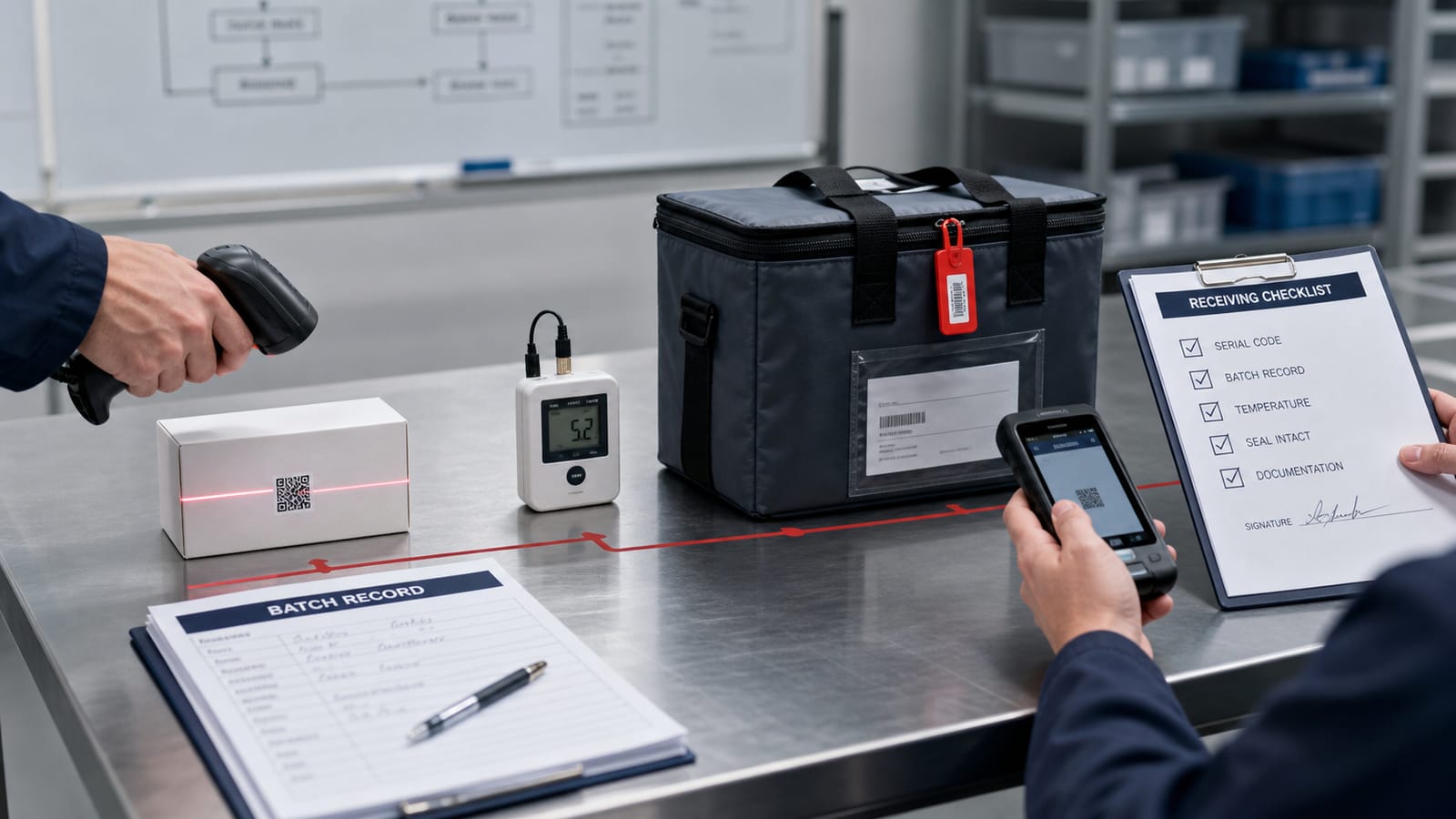
A practical readiness review should bring regulatory, quality, commercial, logistics, finance and technology owners together. They should test the same scenario from end to end: approve a supplier, receive a batch, place it on hold, release it, fulfil an authorised order, investigate a complaint and identify affected customers. Any step that depends on an undocumented conversation or inaccessible spreadsheet is a useful finding. Closing those gaps before regulated supply is how a compliance-first principle becomes an operating capability.