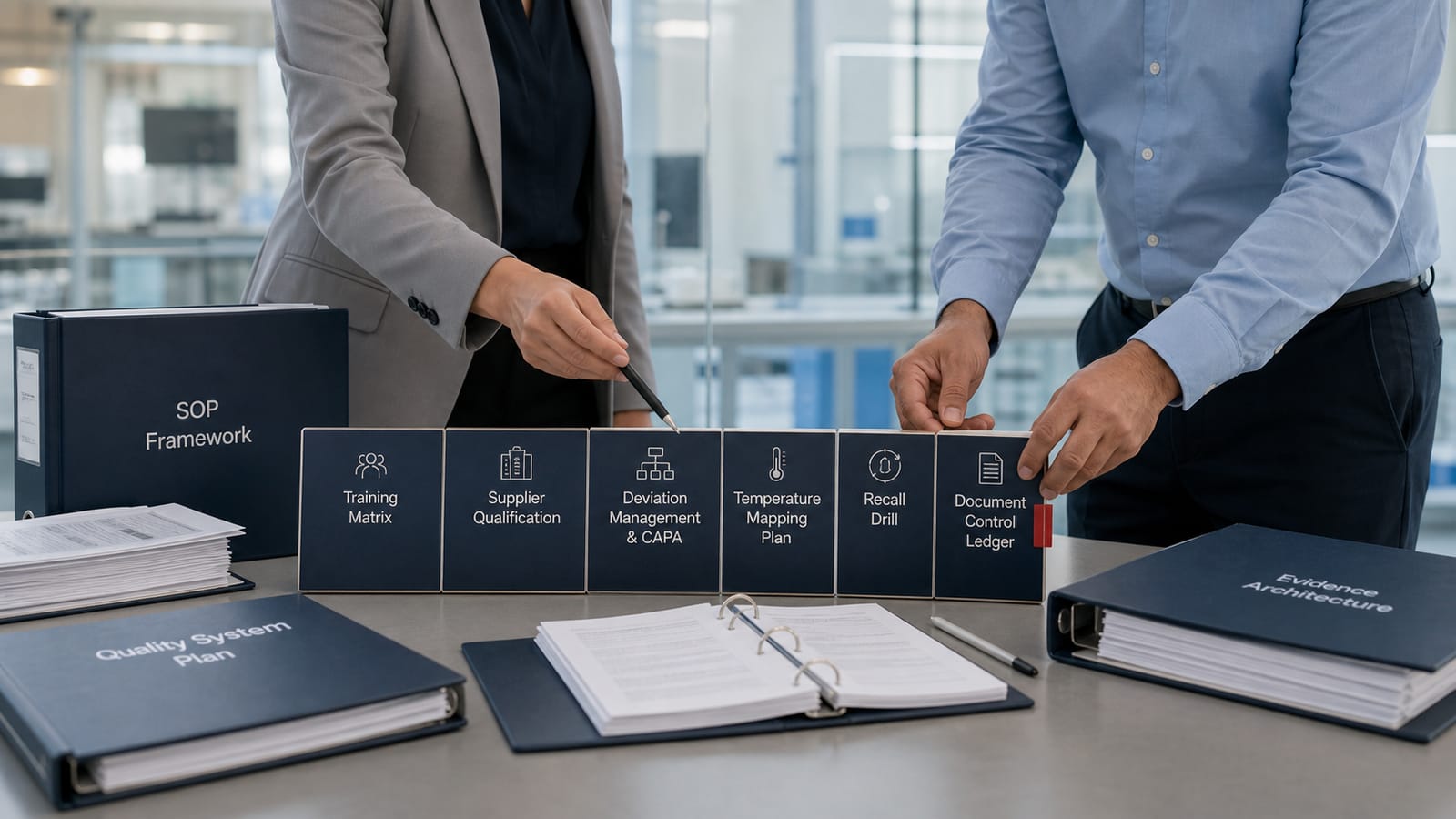
A practical architecture for connecting product, batch, temperature, custody, order, customer and quality records without overstating blockchain or automation maturity.
Traceability is a set of answerable questions
A traceable pharmaceutical supply chain can answer practical questions quickly and with evidence. Which authorised product and presentation is this? Who supplied it? Which batch and expiry were received? What was its release status? Where was it stored and transported? Which customer received each quantity? Were there temperature events, complaints, returns or quality decisions? Can the affected stock and customers be identified if a recall is initiated?
Those answers rarely live in one system. Product and supplier masters, warehouse records, temperature platforms, order systems, quality files, customer records and regulatory documents all contribute. The design challenge is to connect them through stable identifiers, controlled status and trustworthy timestamps without creating uncontrolled copies or an unreadable mass of data.
Begin with the master data
Traceability depends on consistent identity. A product needs a governed record covering SKU, GTIN or EAN where applicable, name, strength, dosage form, pack size, manufacturer, source, regulatory and marketing status. A batch record needs the product, supplier, batch number, expiry, quantity, location and release status. Customer and supplier records need legal identity, authorisation scope and lifecycle status.
The identifiers should survive movement between systems. If a warehouse uses a different item code, the mapping must be controlled. If a supplier changes its legal entity or site, the relationship should be versioned rather than silently overwritten. A document should link to the business record it supports, such as a supplier, product, batch, order or quality event.
- One canonical identifier for each business entity.
- Controlled mappings to external system identifiers.
- Explicit lifecycle and release status.
- Timestamp and source-system lineage for material events.
- Versioned links to approved evidence.
Model custody and legal title separately
A medicine can be owned by one organisation and physically held by another. It may move through a contracted warehouse and carrier while the pharmaceutical company retains legal title and quality oversight. A useful traceability model records both commercial ownership and physical custody where they matter.
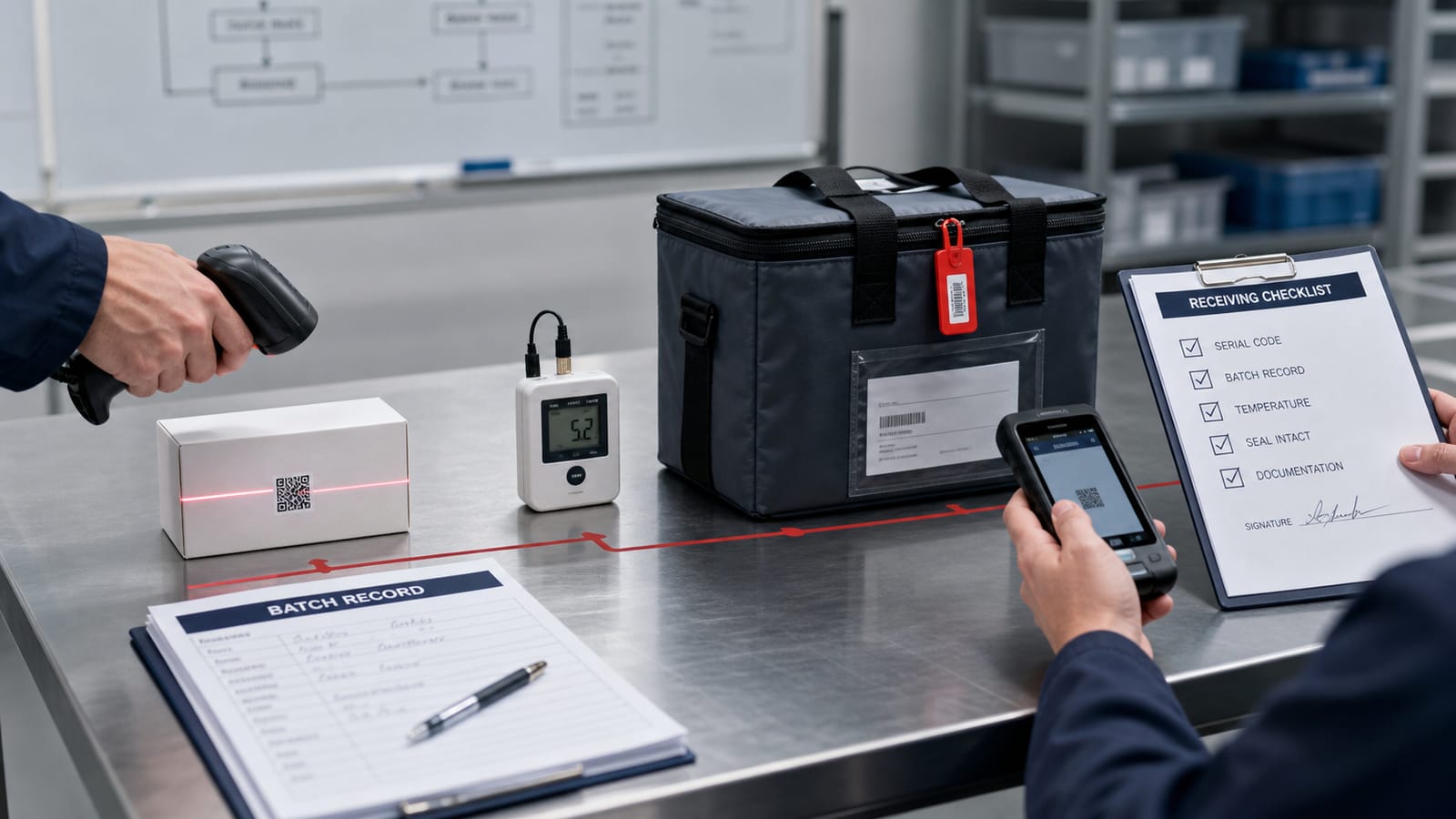
Events may include expected receipt, physical receipt, quarantine, quality release, allocation, pick, dispatch, carrier handover, delivery, return and destruction. Each event should identify the product, batch, quantity, location, actor or system and timestamp. Corrections should remain auditable. A later status should not erase the evidence of what was originally recorded.
Temperature data needs context
A stream of temperature readings is not by itself a quality decision. The data must be associated with calibrated equipment, a shipment or location, defined limits and a time period. An excursion creates an event that requires assessment against product information, stability evidence and procedures. The outcome may be acceptable, held for further review or rejected.
The traceability platform should preserve the raw evidence or its controlled source link, the alert, investigation, decision and approving role. Customers should see only the status and information appropriate to them. A dashboard should not imply product suitability because most readings were within range when a relevant excursion remains unresolved.
Connect orders to batches and customers
Batch-to-buyer traceability becomes useful when allocation and dispatch connect the order line to the actual batch quantity supplied. The organisation can then answer which customers received an affected batch and how much stock may remain. Returns should retain the original relationship and record whether stock is saleable, quarantined or destined for destruction.
Customer scope also matters. A product may be authorised and released but not approved for every account, contract or destination. The ordering service should validate customer status, product sellability, pricing, credit and available released stock on the server. The customer interface should not rely on hidden client-side assumptions.
Audit logs should describe meaningful change
An audit log is more useful when it records the actor, action, entity, time, correlation identifier and integrity evidence for the previous and new state. Logging every screen view without context can create noise while missing the decisions that matter. Quality and security events need retention, access control and review routines.
Integrations also require auditability. An order sent to a logistics provider should have an idempotency key, destination status, attempt count and safe error code. A document synchronised to SharePoint should retain the source checksum and target item identifier. When a connector is unavailable, the event should remain pending or blocked rather than being marked complete with invented data.
Blockchain is an architectural option
Distributed-ledger technology can make some records difficult to alter and may support shared verification across organisations. It does not automatically make the source data correct, resolve commercial governance or replace regulatory systems. It also introduces key management, privacy, interoperability, cost and correction questions.
A sensible roadmap first establishes canonical data, event definitions, access controls, integration reliability and ordinary tamper-evident audit records. A blockchain pilot should then address a defined multi-party problem that cannot be solved more simply. Success criteria might include faster verification between authorised participants or stronger evidence for a specific custody event, not the presence of a blockchain label.
NovaPharm describes batch-level traceability and blockchain as planned capabilities. The live foundation is the data and document architecture: products, suppliers, batches, orders, documents, quality records, SharePoint links and audit events share relationships. That foundation can support more advanced traceability later. It also delivers value now by making the supply chain easier to understand, govern and inspect.
A traceability exercise should be timed and evidenced. Select a batch, identify its inbound source and quality state, reconcile remaining stock, list every affected dispatch and locate the supporting documents. Then start with a customer order and trace back to the exact batch and approved source. Gaps should create controlled improvement actions. This tests the outcome the architecture is meant to provide and avoids mistaking a technically connected system for an operationally reliable one.